
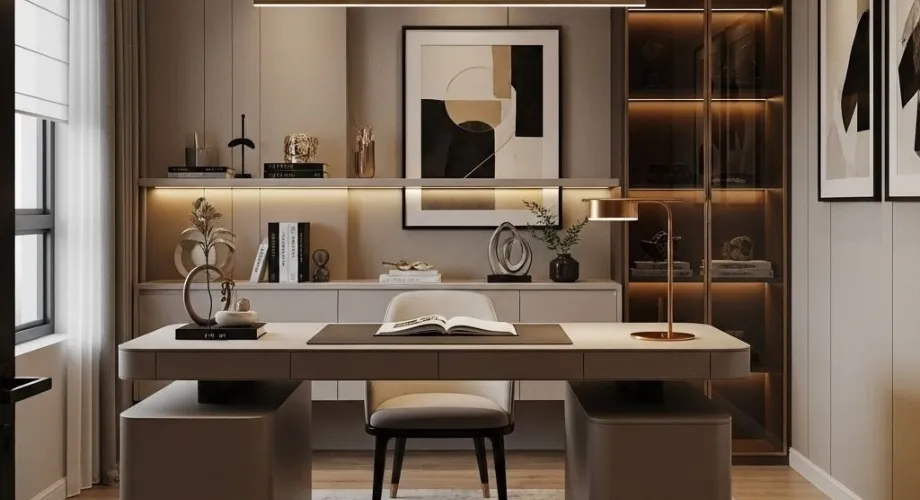
Poorly planned home offices reduce focus, comfort, and daily productivity. 2026 home offices combine flexibility, ergonomics, technology, wellness, and style. Homeowners increasingly need spaces supporting focused work and video meetings. Smart layouts help separate work routines from everyday home activities.
DesignCafe highlights ergonomic furniture, calming colours, and layered lighting choices.
These choices support comfort, focus, and flexible working throughout days.
Trend | Why It Matters | Practical Idea |
Ergonomic furniture | Improves comfort | Adjustable desk and supportive chair |
Biophilic design | Creates calmer spaces | Plants, timber, natural textures |
Smart lighting | Improves working comfort | Layered and adjustable lighting |
Flexible layouts | Saves valuable space | Foldable or modular furniture |
Acoustic control | Reduces distractions | Panels, rugs, curtains |
Smart technology | Improves convenience | Connected lights and cable management |
Sustainable materials | Supports lasting design | Durable, low-VOC finishes |
Ergonomic furniture supports comfortable working throughout long professional hours. Adjustable desks help users alternate sitting and standing positions comfortably. Supportive chairs should provide lumbar support and adjustable seating features. Keep monitors near eye level to reduce unnecessary neck strain.
Natural light makes home offices feel brighter and more welcoming. Position desks beside windows while avoiding direct screen glare. Layer task, ambient, and accent lighting for flexible daily use. Warm lighting can create calmer evenings after demanding workdays.
Good lighting also improves video calls and workspace appearance. DesignCafe recommends combining task and ambient lighting for adaptable workdays.
Biophilic design brings plants, timber, textures, and daylight indoors. Indoor plants can soften workspaces while creating visual interest. Natural materials also create warmer, more comfortable working environments. Use greenery strategically without overcrowding your available workspace.
Small homes increasingly need offices that serve multiple purposes. Foldable desks can transform bedrooms, living areas, or unused corners. Built-in storage keeps equipment hidden while maintaining clean visual lines. Choose furniture that adapts when your work requirements change.
This approach works particularly well for compact Indian apartments.
Acoustic panels help reduce distractions during meetings and focused work. Rugs, curtains, bookshelves, and soft furnishings can absorb unwanted noise. Closed doors provide additional privacy during important professional conversations. These solutions create quieter spaces without major structural changes.
Smart technology makes modern home offices easier to control. Automated lighting can adjust brightness according to different working conditions. Smart plugs and cable systems can reduce visible workspace clutter. Reliable internet connectivity remains essential for uninterrupted remote work.
Professional video calls also require carefully planned backgrounds and lighting. Choose simple backdrops that communicate personality without creating distractions. Bookshelves, artwork, plants, and textured walls create attractive backgrounds. Keep unwanted clutter away from the camera’s visible frame.
2026 home offices also prioritize sustainable materials and lasting furniture. Choose durable finishes, low-VOC materials, and responsibly sourced wood. These choices can reduce replacements while improving long-term workspace value. Sustainable design can also create warmer, more natural interiors.
For Indian homes, climate-friendly materials deserve special design attention. Kerala homes benefit from ventilation, moisture-resistant finishes, and practical storage. Good planning also considers power points, internet access, and cooling. Choose materials that handle everyday humidity and regular maintenance.
A practical home office should support work without overwhelming home life. Measure available space before selecting furniture, lighting, or storage. Create separate zones for focused work, calls, storage, and breaks. Keep frequently used items nearby and hide occasional equipment.
The best 2026 home offices solve practical problems first. Comfort, flexibility, lighting, storage, technology, and wellness should work together. Avoid following trends without considering your actual working routine. Build a workspace that remains useful beyond current design trends.
If you need a professional workspace, explore office interior design solutions tailored to your requirements. Experienced interior designers in trivandrum can help plan layouts, lighting, storage, furniture, and finishes.
Contact our design team today for a consultation and transform your available space into a comfortable, productive home office.
Flexible spaces combine ergonomics, technology, wellness, storage, and personal style.
Use foldable desks, vertical storage, sliding panels, and multifunctional furniture.
Warm neutrals, earthy greens, muted blues, and natural tones work beautifully.
Ergonomic furniture improves comfort and supports healthier working positions throughout.
Use acoustic panels, rugs, curtains, bookshelves, and sealed doors effectively.
Yes, plants and natural materials create warmer, calmer, inviting workspaces.
Combine natural daylight, task lighting, ambient lighting, and glare control.
Smart lighting, cable management, connected devices, and reliable connectivity improve efficiency.
Plan storage around equipment, documents, accessories, and future workspace needs.
Hire designers when layout, storage, lighting, or execution becomes challenging.